Blue Patio: Analysis & Review

By Brett Kaufman 

If you are not familiar with the name Jay Wile, you will be in the near future. The talented singer/songwriter/producer from Texas will blow up, it is just a matter of when.

Apple Music 
Spotify


Grade: B+

Jay Wile’s first official EP, Blue Patio, serves as an introduction into the life of a seemingly normal, fun-loving college-grad from Texas. However, beneath the veil of catchy melodies and rhyming lyrics lie themes of love, desire, and heartbreak. Through profound expression of emotion, decent vocal range, and strong production and songwriting, Wile flashes signs of brilliance very early on in his career as an R&B/Soul musician.

The EP begins with “Numb,” immediately establishing a somber mood that is sustained throughout the majority of the tape. The first words of the song perhaps best exemplify the aimlessness and melancholy that Wile intends to convey— “I’ve been thinking, I should start drinking… To replace the void, you leave when you go missing.” The next two songs, “Vibe” and “Honest,” bolster the gloomy atmosphere present in the intro track. Wile utilizes a simple, yet pleasant, chord pattern in “Honest,” cementing his voice as the focal point of the song. Wile also flaunts his exceptional control of vocal range, seamlessly transitioning to falsetto many times throughout the song.

The ambiance transitions away from soulful in more upbeat songs “Wittme” and “Dwn.” Despite being catchy, these repetitive songs come at the cost of some lyrical quality, but cannot be held against Wile as he searches for his own identity as a young musician. This being said, the soulful, heartfelt Jay Wile is much more appealing to listeners and critics alike; his voice is more suited to convey emotion, rather than to produce catchy hooks.

The best display of Jay Wile’s raw talent is his fifth track, “BluePatio.” Mellow synth keys and loud snares revive the somber mood present in earlier tracks. Wile’s vocals shine in this song as he yearningly discusses his desire for lasting love, sounding remarkably similar to Frank Ocean in early works, such as The Lonny Breaux Collection and Nostalgia, Ultra. Although perhaps bold, this comparison serves as an example of how talented Jay Wile is.

The few flaws present in his debut are expected of any up-and-coming artist as they look to correct any blemishes in their craft. The raw vocal talent of Wile, paired with his ability to write meaningful and emotional songs will make recognition unavoidable. As he solidifies his identity as an R&B/Soul musician, expect Jay Wile to turn heads in 2018.
Scum F*ck Flower Boy: Album Review

By Brett Kaufman

Apple Music
Spotify


GRADE: A

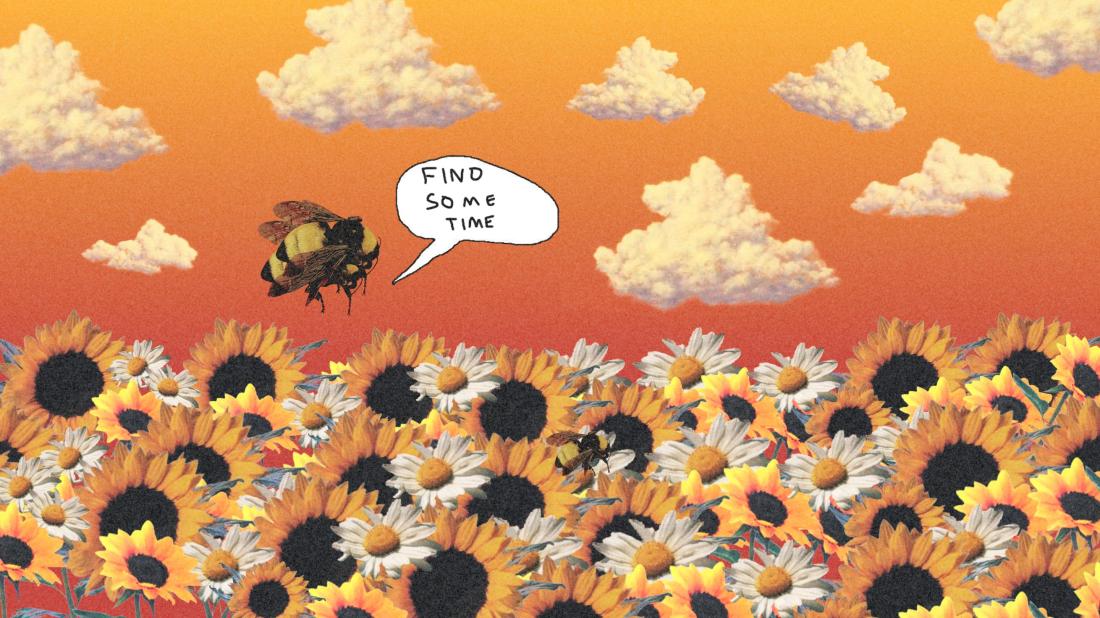
Tyler the Creator’s fourth album, Scum F*ck Flower Boy, offers a new perspective into the creative personality that is Tyler Okonma, bringing his unique duality to center stage. Tyler the Creator is split down the middle. The more palpable, “Scum F*ck” side of him is evident in his past. For example, Tyler’s insensitive and vulgar lyrics have had consequences, as he is banned from visiting the UK for supposedly “encouraging violence and intolerance of homosexuality.” On full display throughout the album is Tyler’s “Flower Boy” side, where sexuality and identity are less clear-cut. Tyler explores depths of himself and produces the lovely, but vulnerable Scum F*ck Flower Boy.

Throughout the album, we are introduced to a side of Tyler Okonma that was previously absent in his earlier works. “See You Again (feat. Kali Uchis)” and “911 / Mr. Lonely (feat. Frank Ocean and Steve Lacy)” are the strongest songs off the album, encapsulating the theme of self-exposure evident in its entirety. The first of which is Tyler’s account of love, or lack thereof. Whether the “you” Tyler is lusting after in this song is male or female is not made clear throughout the album, adding ambiguity to Tyler’s proclaimed sexuality. “911 / Mr. Lonely” is Tyler’s depressed and lonely yearning for meaningful social interaction. Frank Ocean’s memorable “Chirp Chirp” is followed by a short verse echoing Tyler’s desire to break the boredom present in his life.

The intended direction of this album is made clear by observing who Tyler chose to feature on his fourth installment. Beautiful voices such as Frank Ocean, Rex Orange County, Estelle, and Steve Lacy are oftentimes the focal point of songs, forcing Tyler to take a backseat in his own song. This should not be looked at lightly, as in the end, Tyler’s sacrifices his strong, deep voice, for perhaps more graceful, delicate sounds to contribute to the overall mood of the album. This is evident in the song “Garden Shed.” Tyler does not appear on the song until the last minute of this near-four-minute song. Instead, Estelle and a booming, uncut electric guitar harmonize, producing a stunning combination that is both strong but delicate. To conclude this song, Tyler delivers a punching 30-line verse about his sexuality, sensitivity, and vulnerability.

The more familiar, hardened side of Tyler the Creator is revived in songs “Who Dat Boy (feat. A$AP Rocky) and “I Ain’t Got Time!”. While these songs offer hard-hitting verses to those who do not enjoy the depth explored by Tyler throughout the majority of the album, they could perhaps be interpreted as relapses on Tyler’s attempt to put his sensitivity on full display.

Scum F*ck Flower Boy acts as a lens through which listeners are able to explore the depths of Tyler Okonma. This masterpiece of unique instrumental patterns, melancholy melodies, and punching guitar chords puts Tyler’s creative ability as a musician, rather than a rapper, on full display. Scum F*ck Flower Boy is Tyler’s best album to date and is an ideal example of the maturity and “growing up” of an artist. Tyler is no longer the vulgar, oddball that created Goblin in 2011, but rather an extremely talented musician, producer, and rapper—and deserves all the praise he receives for his fourth studio album.


Song of the Album: See You Again (feat. Kali Uchis)

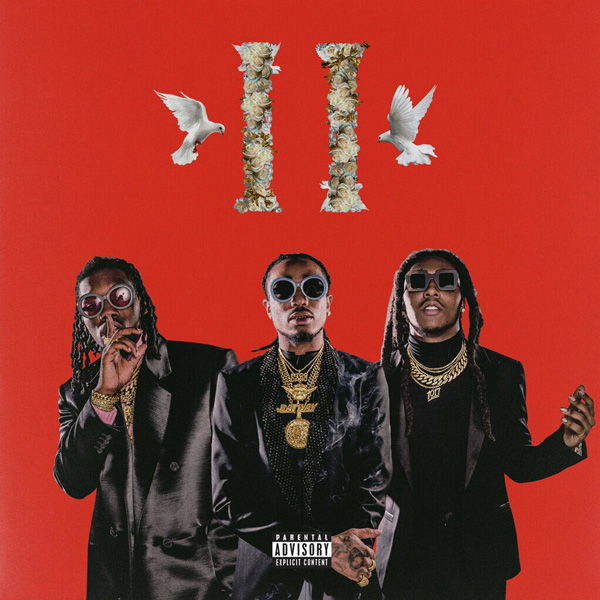
Culture II: Album Review: B-

by Nolan Hullinger

Apple Music
Spotify


Grade: B-

First of all:

TAKEOFF, THANK YOU FOR SHOWING UP!


The typically quiet and notoriously forgotten member of Migos proved on Culture II that he could hold his own with Quavo and Offset, who are typically the most star-studded members of Migos. His verses in Stir Fry and Too Much Jewelry, and his ability to deliver incredible hooks, such as the hook on Too Much Jewelry and Gang Gang, proves to all of us fans that Takeoff is here to stay.

The occasionally predictable Migos were able to mix up the sound of their voices, by distorting the autotune on tracks like CC and Too Much Jewelry. They were also able to alter their flow, being more melodic, on songs like Beast and Gang Gang. The use of “Migos flow” is evident in all of their songs. They use common ad-libs, such as “skrrt,” “ice,” “hey,” or typically something that they have just said in the current line, in order to fill every second of the song with voices and hard beats. When they have features; similarly, they, too, use these ad-libs. It is very uncommon to hear an artist like Big Sean use these small phrases in between his words, but when you’re a guest on a Migos song, it’s almost a necessity.

One area that was slightly lacking in this album was the consistency of great hooks. Occasionally there was a hook that was simply too repetitive, which is a trademark of Migos. These repetitive hooks are evident on almost all Migos songs, but particularly noticeable on tracks like Flooded, Beast, and Walk It Like I Talk It. Overall, this was a respectable work of art. The songs that are good, are very good; however, the songs that are not as good, are not very good. But with songs like Bad Bitches Only, Stir Fry, and Motorsport, they are able to keep themselves on the radio, and in the rotation of fan’s party playlists.


Song of the Album: Gang Gang

Even though the constant use of the phrase “gang gang” can be repetitive, this song is a step in the right direction for the group. They are slowly becoming more melodic over time, and developing more thoughtful and meaningful lyrics to complement their incredible beats and unparalleled flow.

In the intro to the song, Takeoff sings:

“Hey, I know this might sound weird to say

But would you love me if I ran away?”

By this, it can be assumed that Takeoff, as previously mentioned, is often the forgotten member of Migos. He is reflecting on his life, and asking if he should just run away, and if he did, would this person love him? Using these deep lyrics is something that Migos’ songs need desperately. Look for them to get much lyrically deeper, like Future did on his HNDRXX album that was released in February of 2017.